


Which module for me?

.png)
Absorb
Small Spaces
First Reflection
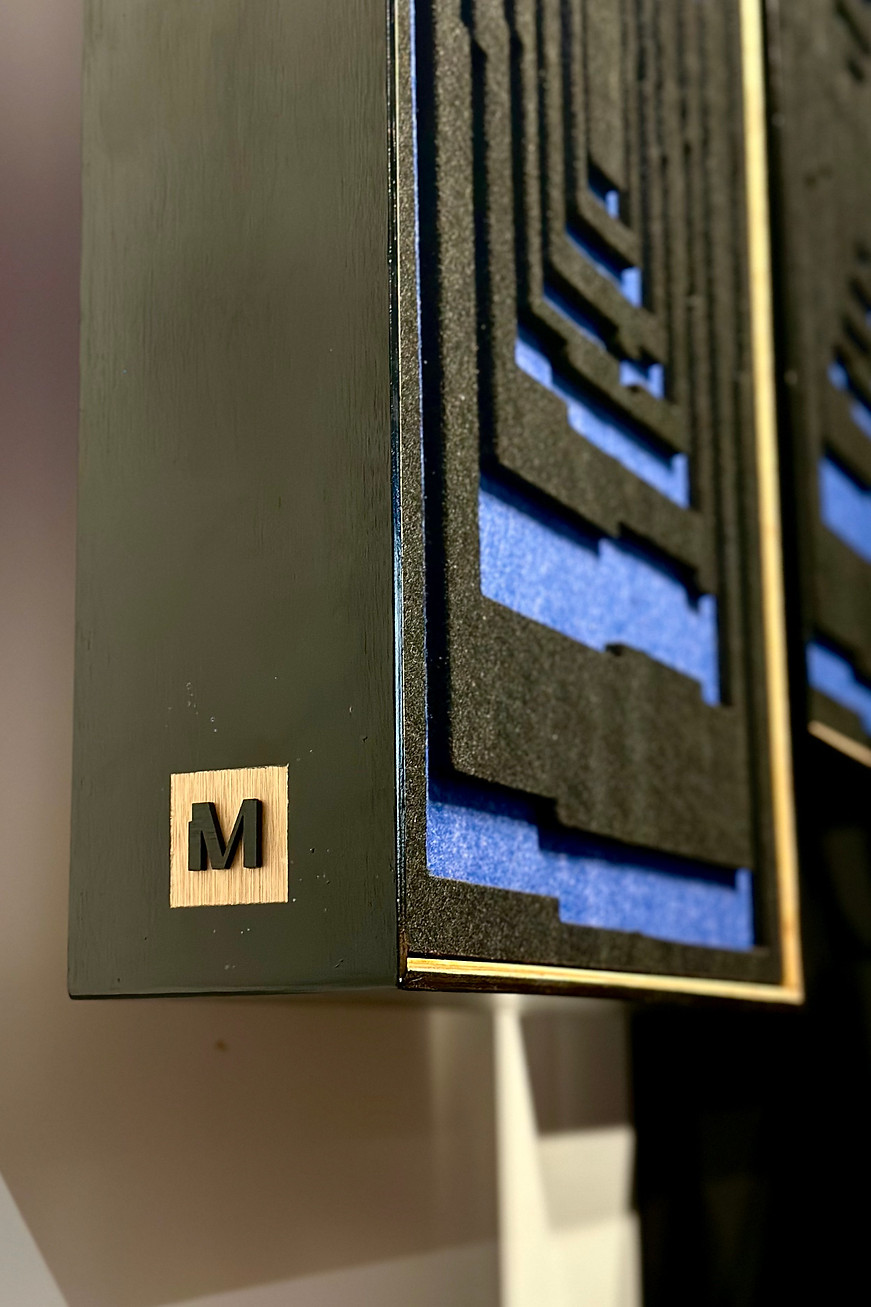
Acoustic absorption is about soaking up unwanted sound reflections so they don’t bounce endlessly around a room. When you clap your hands in a bare space and hear a sharp echo or lingering “ring,” that’s sound energy reflecting off hard surfaces like walls, ceilings, and floors. Too many reflections can make music muddy, speech hard to understand, and long listening sessions fatiguing. Absorbers reduce these reflections, creating a cleaner, more accurate sound environment—whether it’s for mixing a track, watching a movie, or simply enjoying a calmer, quieter space. At MorphAcoustics, our absorbers are engineered as multi-layered acoustic systems rather than single-material solutions. Each module combines: Front and back PET felt layers for high- and mid-frequency absorption and surface reflection control. Precisely calculated air gaps that improve low-frequency performance through increased sound wave penetration. A dense mineral wool acoustic core that targets and attenuates bass and low-mid resonances. This engineered layering ensures a broad frequency range of absorption, delivering control from deep bass to crisp treble. Applications vary: bass traps in corners address low-end buildup, ceiling clouds control vertical reflections, and wall-mounted absorbers at first reflection points improve clarity, stereo imaging, and speech intelligibility. By tuning the thickness of each layer and adjusting the air gap depth, we create tailored solutions for each acoustic environment. Pure diffusion is ideal for performance venues, control rooms, and listening environments where liveliness, depth, and even coverage are desired. However, many spaces need both control and spaciousness—this is where hybrid modules excel. Our MorphAcoustics hybrid systems integrate diffusion geometry on the surface with a concealed multi-layer absorption system behind it: PET felt, air gaps, and dense mineral wool work together to subtly attenuate problematic frequencies while allowing others to remain vibrant. This combination gives you the best of both worlds—tight, controlled sound without losing the natural ambience of the room. Every diffuser and hybrid module is designed as an acoustic-architectural element, merging precision performance with visual design.
Diffuse
Character
Live Rooms
Diffusion improves a room’s acoustic character without deadening it. Instead of absorbing energy, diffusers use precisely calculated surface geometry—often based on mathematical sequences like Quadratic Residue or Skyline patterns—to scatter sound waves in multiple directions and time intervals. This breaks up strong reflections, eliminates flutter echoes, and maintains a sense of openness and space. Pure diffusion is ideal for performance venues, control rooms, and listening environments where liveliness, depth, and even coverage are desired. However, many spaces need both control and spaciousness—this is where hybrid modules excel. Our MorphAcoustics hybrid systems integrate diffusion geometry on the surface with a concealed multi-layer absorption system behind it: PET felt, air gaps, and dense mineral wool work together to subtly attenuate problematic frequencies while allowing others to remain vibrant. This combination gives you the best of both worlds—tight, controlled sound without losing the natural ambience of the room. Every diffuser and hybrid module is designed as an acoustic-architectural element, merging precision performance with visual design.

.png)

The essence
of airgaps
Small Spaces
Dynamic
In acoustic design, one of the simplest yet most powerful tools for improving sound absorption is often invisible — the air gap. This intentional space between an absorber and the wall or ceiling significantly increases the efficiency of the acoustic treatment, allowing materials to perform beyond their physical thickness. When sound waves encounter an absorber, part of their energy is converted into heat through friction within the material’s fibers. However, low-frequency waves — with longer wavelengths — tend to pass through thin materials with limited resistance. Introducing an air gap behind the panel extends the effective depth of the absorber, enabling it to target a broader range of frequencies, particularly in the low and low-mid spectrum. From a physical standpoint, sound pressure is highest near room boundaries (walls and ceilings), while particle velocity — the component responsible for absorption — peaks at a distance away from those surfaces. By offsetting an absorber into the room, we place it exactly where it can capture this movement most effectively. The result is a measurable improvement in acoustic balance, smoother decay times, and greater perceived warmth in the sound field. At MorphAcoustics, this principle lives at the core of our modular hanging system. Each module is suspended from the ceiling, naturally creating a defined air cavity behind and around it. This design doesn’t just enhance visual presence — it harnesses acoustic physics to maximize performance. The panels “float” within an optimal zone, reducing reflections, improving clarity, and allowing the room to breathe both visually and sonically. By combining sustainable materials with intelligent spatial acoustics, we transform what’s usually hidden behind the surface into an active part of the room’s design. Form, function, and air — working together to shape how we experience sound.
First Reflections
Small Spaces
First Reflection
First reflections are the earliest sound waves that bounce off walls, ceilings, or floors before reaching your ears or microphones. These reflections can cause phase interference, comb filtering, and muddiness, which negatively impact clarity, imaging, and overall sound quality. Finding the exact locations of first reflections is a key step in any acoustic treatment process. This is typically done by using a mirror trick: when sitting in your listening or mixing position, a helper moves a mirror along the walls and ceiling—wherever you see the speaker’s reflection from that spot, that’s a first reflection point. These points are where sound arrives indirectly but quickly enough to interfere with the direct sound. If you’re working with a limited budget, focusing on treating first reflections is the smartest place to start. Controlling these early reflections with absorptive or hybrid modules can dramatically improve clarity and imaging without needing to treat an entire room. It’s a cost-effective way to achieve a noticeable upgrade in sound quality and listening comfort.


Bespoke
Made to measure
Architectural Integration
Our series products are crafted to deliver outstanding performance in most spaces, but some projects demand a truly personalised touch. MorphAcoustics Bespoke offers the freedom to adapt our designs entirely to your space—whether that means creating custom-sized modules, tailoring finishes and colours, or planning fully integrated acoustic interiors. From a single statement wall to an entire room designed for acoustic excellence, we work closely with you to ensure every element fits seamlessly—both acoustically and visually. This can include designing continuous panel systems, incorporating acoustic treatments into architectural features, or developing complete wall and ceiling layouts. With bespoke, you receive the same proven MorphAcoustics performance, crafted as a perfect fit for your space’s proportions, purpose, and aesthetic vision.
The art of
bedroom studios
Small Spaces
First Reflection
Designing a studio from scratch allows you to shape sound through architecture. Transforming a bedroom into a studio, however, is a different kind of craftsmanship — one that balances limitations with clever, informed design. It’s where acoustic understanding meets creativity. A bedroom was never built for sound, yet with the right decisions it can perform impressively. It starts with placement: position your listening spot about one-third into the room, keeping symmetry between side walls and forming an equilateral triangle with your monitors. Avoid sitting in the exact center or against walls — that’s where bass build-up and phase issues live. Next comes reflection control. The most disruptive reflections come from the side walls and ceiling. Placing absorbers at these “first reflection points” — easily found using the mirror test — sharpens imaging and improves clarity. A ceiling cloud above the listening area, such as MorphAcoustics’ hanging modules, not only controls reflections but also creates an air gap, which extends absorption into lower frequencies for a more balanced sound. Corners are where low frequencies collect, so adding bass traps or thick absorbers there smooths the low end. Soft furniture, curtains, and rugs naturally help tame higher frequencies — they’re part of the solution, not obstacles. In the end, the goal isn’t perfection — it’s balance. Every bedroom has its quirks, and the art lies in turning them into assets. With smart positioning, thoughtful treatment, and modular systems designed to enhance rather than hide, a simple room can become a truly creative acoustic space. Finding the exact locations of first reflections is a key step in any acoustic treatment process. This is typically done by using a mirror trick: when sitting in your listening or mixing position, a helper moves a mirror along the walls and ceiling—wherever you see the speaker’s reflection from that spot, that’s a first reflection point. These points are where sound arrives indirectly but quickly enough to interfere with the direct sound. If you’re working with a limited budget, focusing on treating first reflections is the smartest place to start. Controlling these early reflections with absorptive or hybrid modules can dramatically improve clarity and imaging without needing to treat an entire room. It’s a cost-effective way to achieve a noticeable upgrade in sound quality and listening comfort.


Instructions
Detaild easy hanging
instructions
Getting your panel up is simple and satisfying Start by measuring the height and width of your desired placement area to ensure a perfect fit. Once you’ve found the right spot, use a pencil to carefully mark where the holes will go. Next, drill the holes at the marked points. Insert the wall plugs (hoops) and gently tap them into place using a hammer until they sit flush with the wall. Secure the screws into the plugs, making sure they are firmly in place. Before mounting the panel, take a moment to check that everything is perfectly aligned horizontally — this makes all the difference. Finally, hang your panel and step back to admire the result. Clean, precise, and ready to elevate your space.